
Large Pores: Why They Happen and the Treatments That Actually Shrink Them
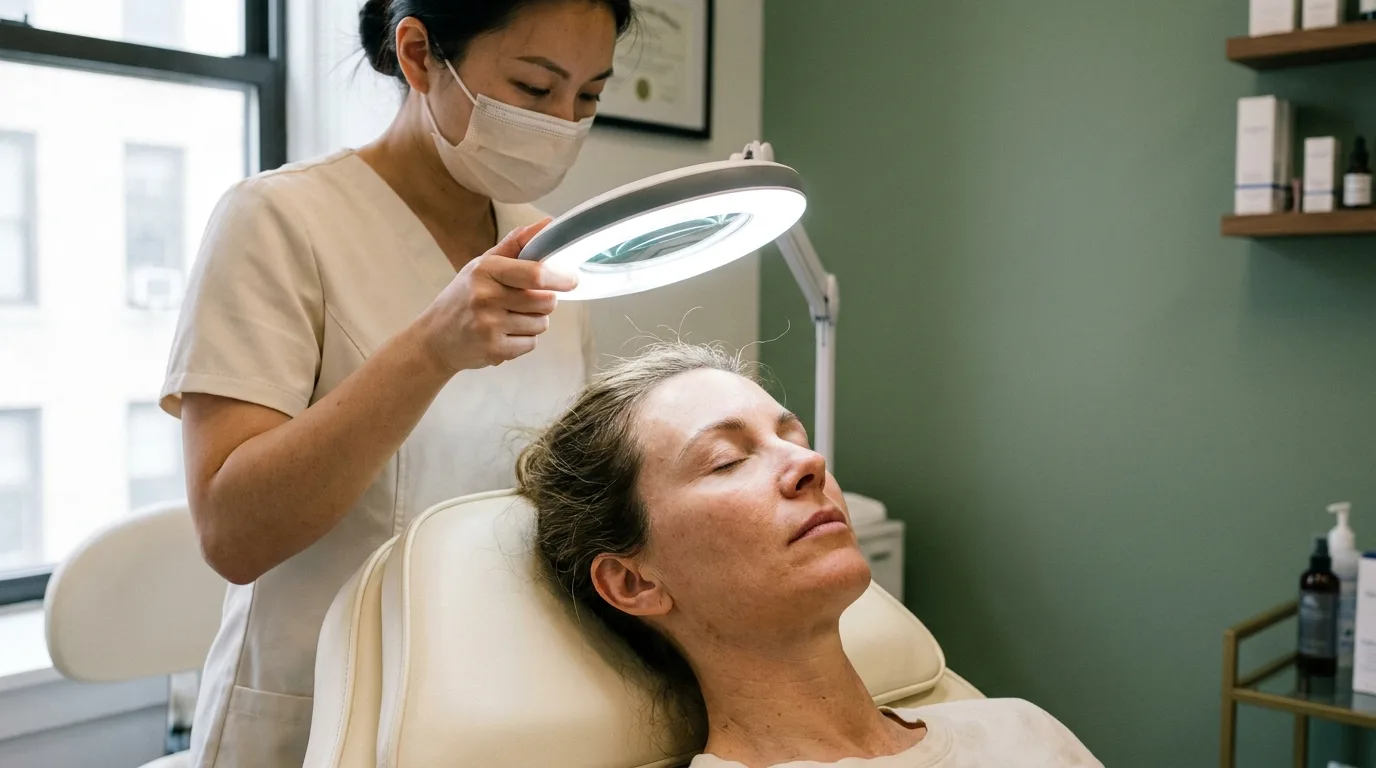
Large pores are one of the most common reasons people book a first visit with us, and one of the most misunderstood. They get blamed on dirt, treated with ice, covered with primer and stripped with tape. None of that changes them for long, because none of it reaches the reason they look large in the first place.
This guide explains what actually makes pores look bigger, which large pores treatment options are worth your money, and which are not. If you have been searching for how to shrink pores and keep finding the same five tips, this is the longer answer. It is written from the treatment room at Skin Lab Clinic in Midtown East, where we look at pores under magnification every day, and it is honest about what can and cannot change.
Why pores look bigger
A pore is the opening of a hair follicle, and every follicle has an oil gland attached. Pore size is mostly set by genetics and by how much oil that gland produces. What changes over time is how visible the opening becomes, and three things drive that.
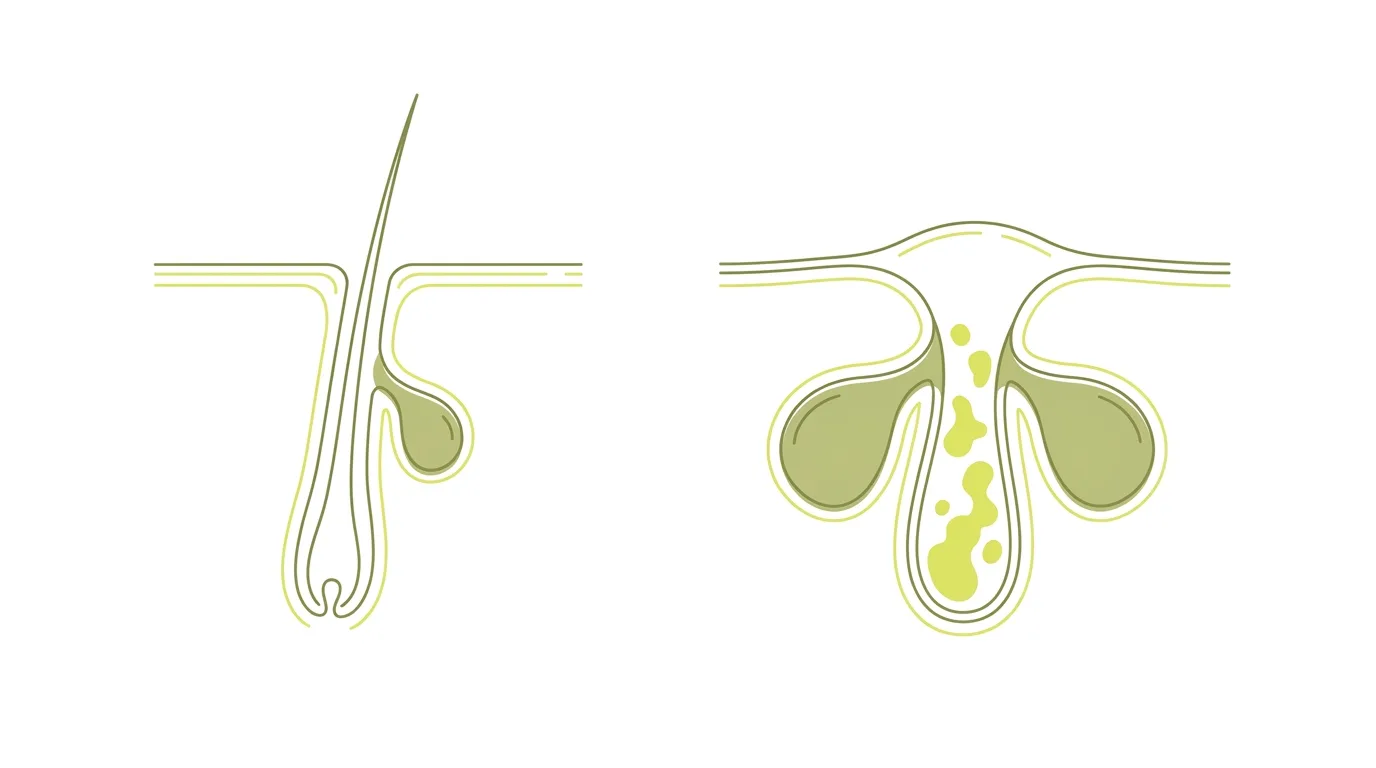
- Oil and congestion. When oil mixes with dead skin cells it packs into the pore and stretches the opening. A full pore also catches light and shadow, which makes it look darker and wider than it is.
- Collagen loss. The skin around each pore is held firm by collagen. From our late twenties we lose some every year, the walls slacken, and pores start to sag open, especially on the cheeks.
- Sun damage. UV breaks down collagen faster than age alone. Years of unprotected sun is the reason many people notice their pores growing in their thirties rather than their fifties.
Genetics and hormones set the baseline, so oily skin types will always have more visible pores on the nose and T-zone. But congestion, collagen and sun are the three things a treatment plan can actually work on.
Two kinds of large pores, and why it matters
Before choosing any enlarged pores treatment, it helps to know which kind you have. They look similar in a bathroom mirror and very different under a magnifying lamp.
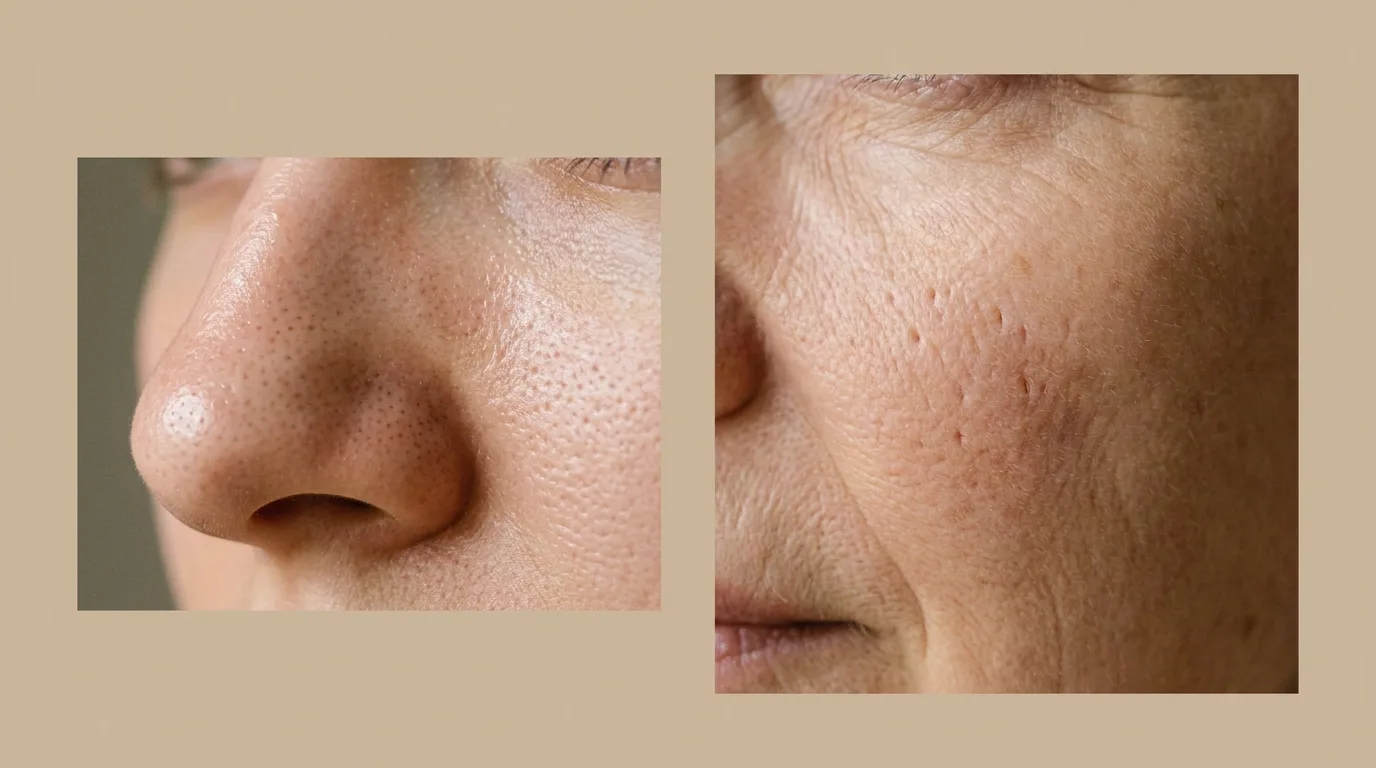
Oil-driven pores: round, on the nose and T-zone
These are round, often look dark or shiny, and sit where oil glands are busiest. The problem is what is inside them. Keeping them clear, through the right home care and professional extractions, makes the biggest visible difference.
Age-related pores: elongated, on the cheeks
These look stretched downward into a teardrop shape, usually on the cheeks, and often appear alongside early fine lines. The problem is the support around them. No cleanser reaches it. This is where collagen-building treatments earn their place.
Most people over thirty have some of both, which is why the best plan usually combines clearing and rebuilding.
What does not work
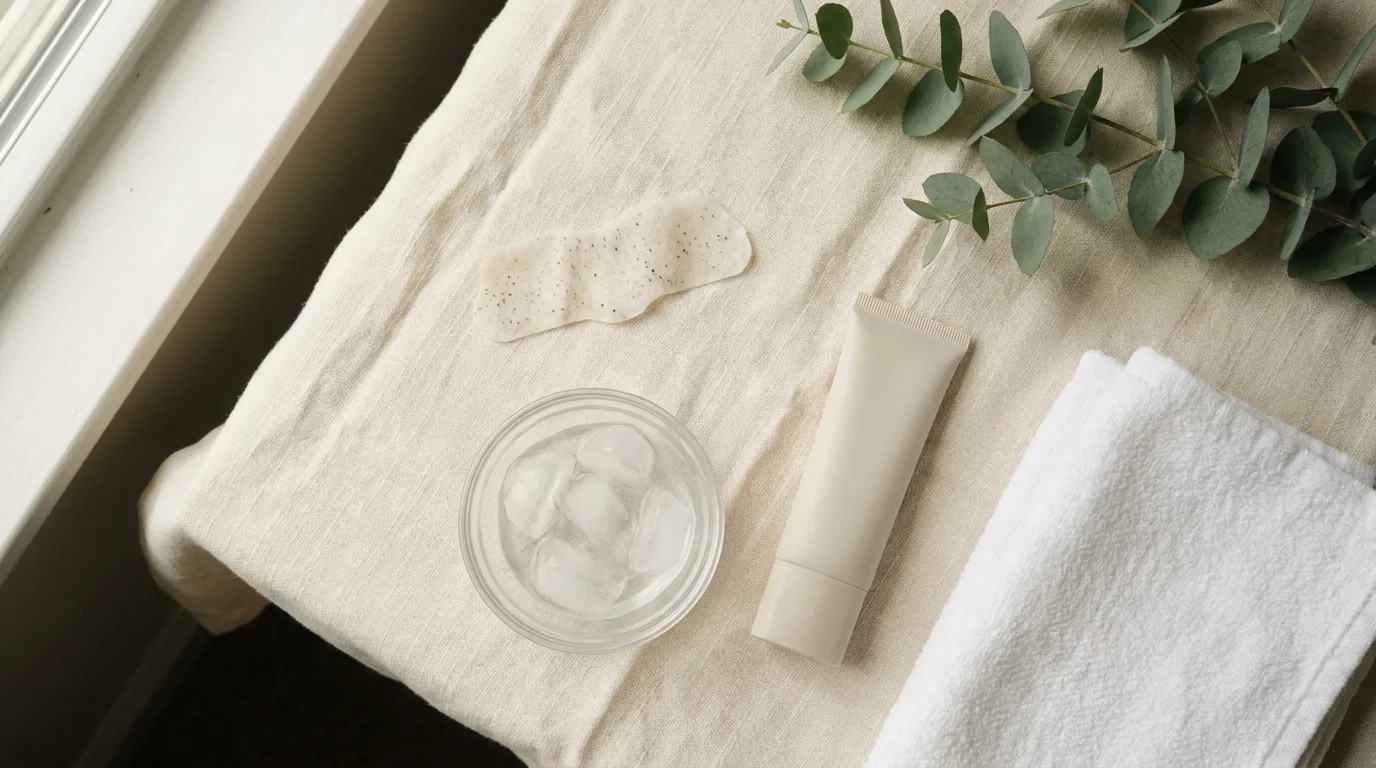
- Pore strips. They pull out the top of a plug and leave the rest. The pore refills within days, and repeated pulling irritates the skin around it.
- Ice and cold water. Cold tightens skin for a few minutes. Pores do not have muscles, so they do not "close". The effect is gone before you leave the bathroom.
- "Pore minimizer" primers. They fill the opening with silicone so light bounces off evenly. Useful under makeup, but it is a cover, not a pore minimizing treatment.
- Harsh scrubs. Gritty scrubs tear at the surface and can trigger more oil, not less.
- Squeezing at home. Fingers push debris sideways as often as out. That is how a clogged pore turns into a mark that lasts a season.
What helps at home
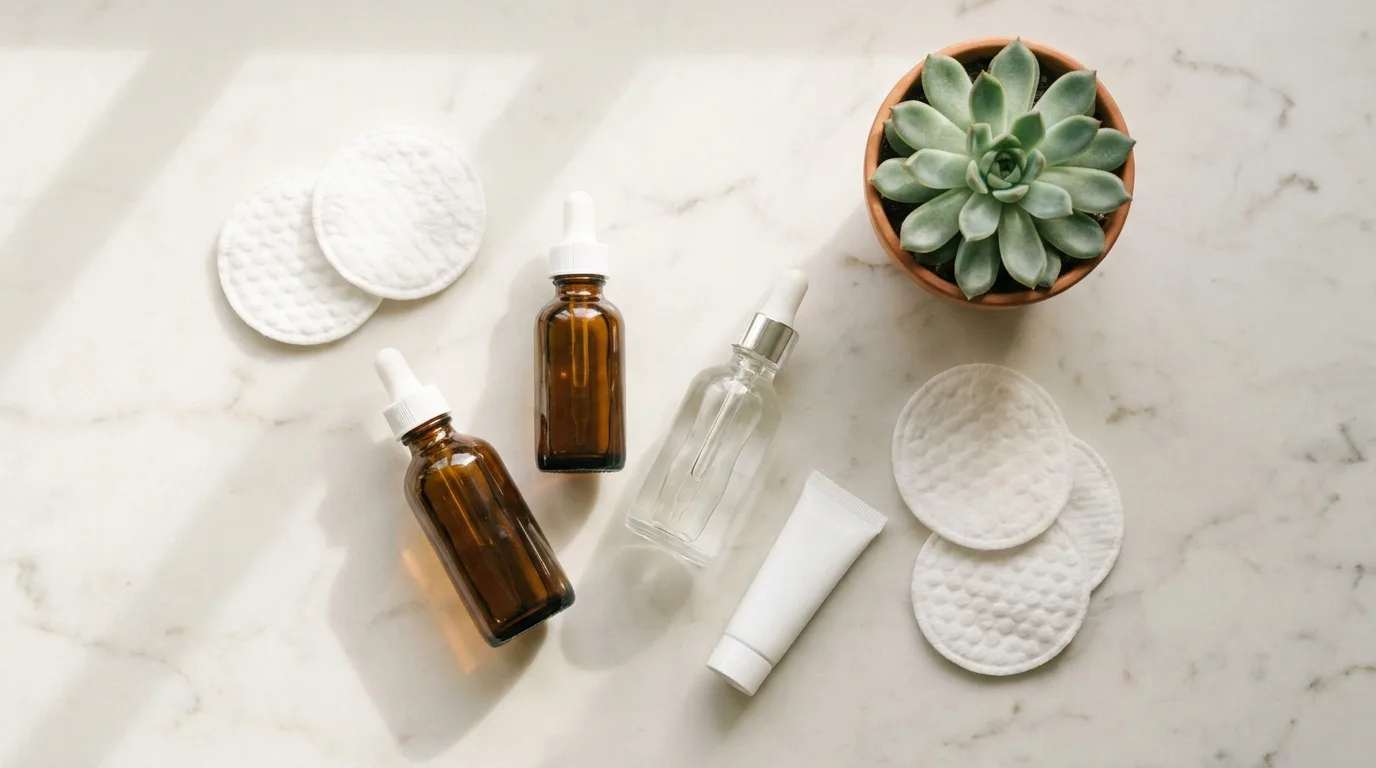
Home care will not rebuild collagen around a stretched pore, but it does keep oil-driven pores clear and slows new damage. Three things matter:
- Salicylic acid (BHA), two to three nights a week. It is oil-soluble, so it gets inside the pore and loosens the plug. Start slowly; daily use is too much for most skin.
- A retinoid at night. Retinoids speed up cell turnover so dead cells do not pile up in the opening, and over months they support collagen too. Alternate with your BHA nights rather than stacking them.
- SPF every morning. Sun damage is the main thing that makes pores grow over the years. Our dermatologist-approved morning routine covers the order.
In-clinic large pores treatments that actually work
Professional treatments work on the two things home care cannot: deep congestion that has packed in over months, and the collagen that holds the pore walls firm.
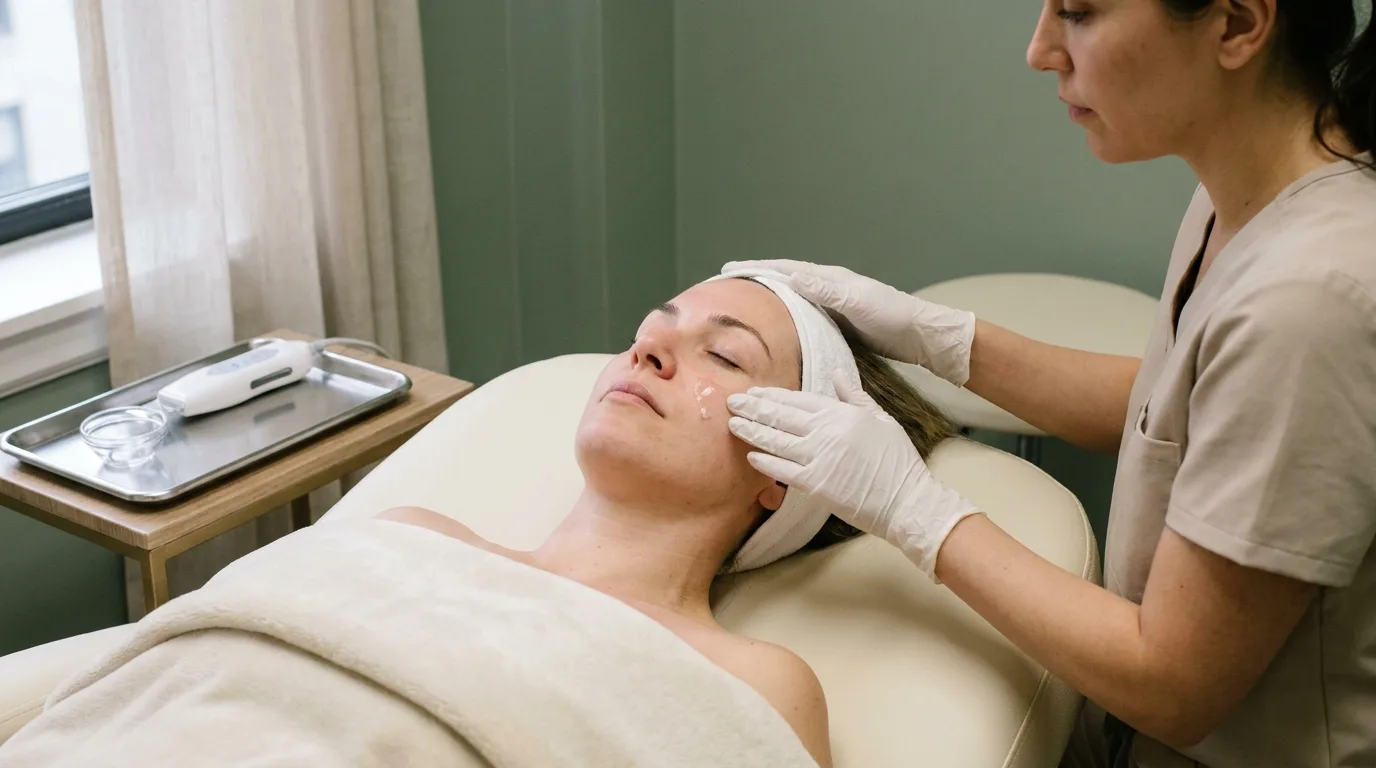
Advanced Medical Facial: for congested, oil-driven pores
The Advanced Medical Facial combines a deep cleanse and professional extractions with a medical peel or microdermabrasion, which lifts the compacted surface layer that traps oil. It is the right first step if your pores look full, dark or shiny. Monthly sessions keep them clear. $499, 75 minutes, minimal downtime.
Glass Skin Microneedling: for stretched, collagen-driven pores
Glass Skin Microneedling combines microneedling with radiofrequency energy. The tiny channels trigger the skin's own repair response, the heat reaches below the surface, and the new collagen firms the tissue around each pore so it looks tighter. This is the most effective microneedling for pores option we offer for elongated cheek pores. $299 per session, 60 minutes, with one to two days of mild redness. Most people need a short course rather than a single session.
Microneedling with PRP: when pores come with scarring
If enlarged pores sit alongside indented acne scars, Microneedling with PRP adds platelets from your own blood to support healing. It is our deepest remodelling treatment and the step up for scarring, not something you need for pores alone. $799 per session or $1,999 for a course of three, with two to three days of redness.
Where a glow facial fits
The Glass Skin Medical Facial will not rebuild collagen, but deep hydration plumps the skin around each pore and evens out how light reflects, so pores look softer the same afternoon. Many clients alternate it with microneedling for both the short-term finish and the long-term change.
Which treatment for which pores
| Your pores | Main cause | Best treatment | Price | Downtime |
|---|---|---|---|---|
| Round, dark or shiny, on the nose and T-zone | Oil and congestion | Advanced Medical Facial, plus BHA at home | $499 | Minimal |
| Elongated, teardrop-shaped, on the cheeks | Collagen loss, sun damage | Glass Skin Microneedling | $299 per session | 1 to 2 days mild redness |
| Large pores with acne scars | Collagen damage from breakouts | Microneedling with PRP | $799, or 3 for $1,999 | 2 to 3 days redness |
| Both kinds, plus dullness | Congestion and collagen loss | Alternate Advanced Facial and Glass Skin Microneedling | From $299 | Minimal to 2 days |
| Need them to look smaller this week | An event, not a long-term plan | Glass Skin Medical Facial | $299 (normally $499) | None |

A word on expectations. Collagen takes time to rebuild, so microneedling results build over the weeks after each session and are clearest a few months after the last one. Pores will not disappear, and anyone promising that is selling something. What changes is how much they catch the light, which is what you actually notice in the mirror.

Not sure which kind of pores you have?
Book Glass Skin Microneedling and every session starts with an assessment under magnification. We will tell you plainly whether your pores need clearing, rebuilding or both, and how many sessions are worth it. $299 per session, 60 minutes, non-surgical.
Book Glass Skin MicroneedlingSkin Lab Clinic · 305 E 55th St, Midtown East, New York · Open 7 days, 9AM to 8PM · Contact us
One Response